Etiquette
The guiding principle of labyrinth etiquette is: Don’t be disruptive to others.
Meditate, pray, or commune in the manner that best suits you.
Walk fast. Walk slow. Skip. Dance. Pause. Sit. Do what moves you, just do it in a way that doesn’t affect others.
A common saying in the labyrinth community is “There is no right way to walk a labyrinth.” The saying recognizes that labyrinth practice is deeply personal and unique to each person. It also recognizes that there are incorrect ways, which is any way that is disruptive to others.
How to walk a labyrinth
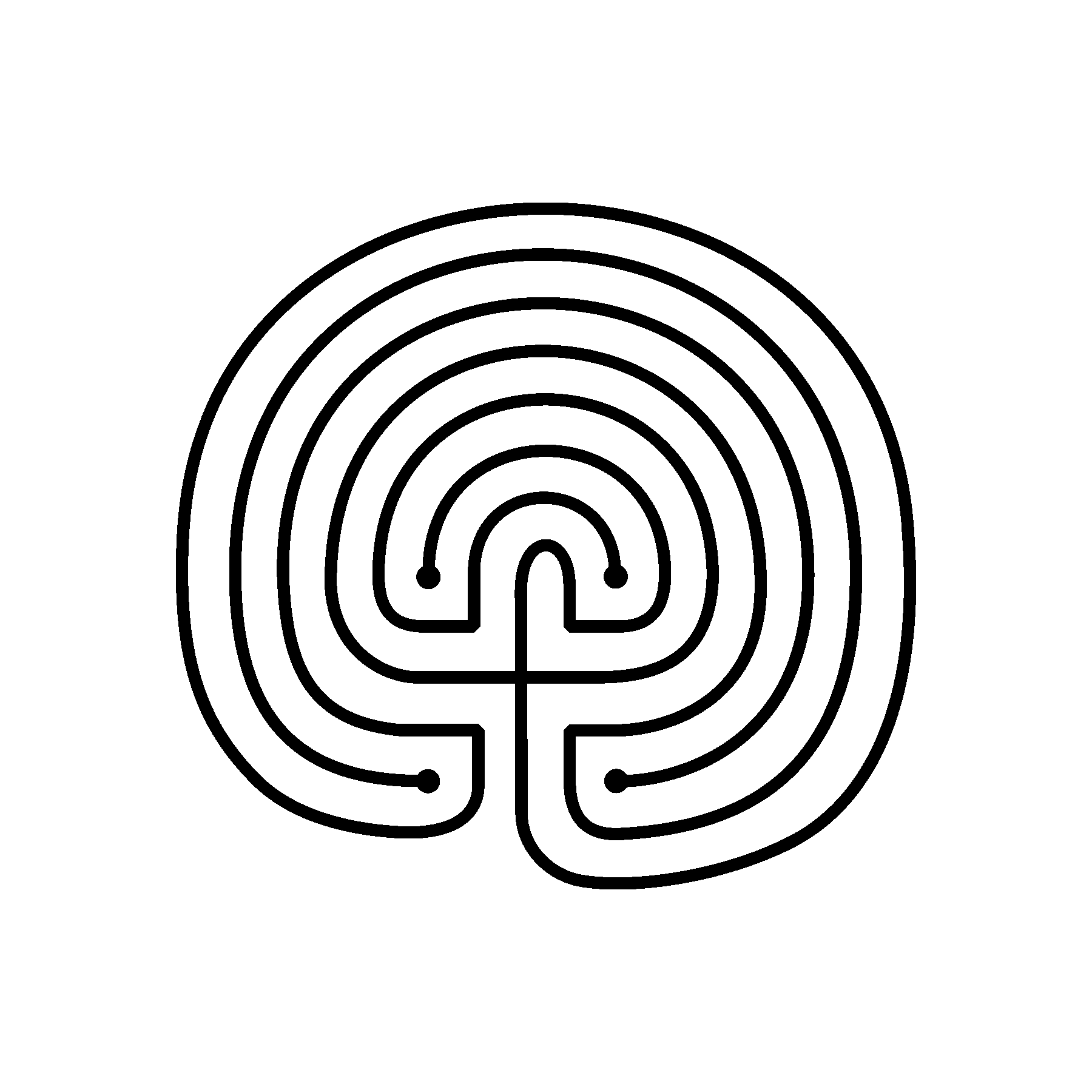
One common way to walk a labyrinth is the three-step approach pioneered by Lauren Artress, a leading figure in the modern labyrinth movement. The approach is designed to enhance meditation and prayer by emphasizing the labyrinth as a tool for meditation, reflection, and transformation.
Here’s a brief overview of her method:
- Releasing: On the inward journey into the labyrinth, focus on releasing the stress, worries, and distractions of everyday life. As you begin your walk, let go of external concerns and mental clutter. This stage is about clearing your mind and preparing yourself for a deeper, more meaningful experience. The labyrinth’s winding path symbolizes your journey inward, allowing you to gradually shed the burden of daily preoccupations.
- Receiving: The center of the labyrinth is a place for contemplation and openness. In the center, you are encouraged to pause, reflect, and be receptive to any insights, emotions, or spiritual messages that may arise. The center represents a place of connection and clarity, offering a moment of stillness where you can gain new perspectives and insights. It is an opportunity to listen deeply to yourself and to the inner voice that often gets overshadowed by the busyness of life.
- Returning: The final step involves walking back out of the labyrinth, but with a renewed sense of purpose and understanding. As you retrace your steps, you integrate the insights and revelations gained during the receiving phase. This return journey symbolizes the application of newfound wisdom and clarity to your everyday life. The act of walking out is a metaphor for bringing the insights from your inner journey back into your daily routine, embodying and acting upon the changes and realizations that have emerged.
The three-step approach provides a structured approach to labyrinth walking that can enhance meditation or prayer. By focusing on releasing, receiving, and returning, individuals can engage more deeply with the labyrinth’s symbolic journey and use it as a tool for personal and spiritual development.
 PDX Labyrinth in the Park